Monday, September 26, 2011
Kids will complain
As a private piano teacher, and former school music teacher, I've heard a lot of kids complain. They have complained about having a new assignment, a quiz, theory homework, not getting to sing the warm up they want, wishing music class lasted longer, wanting class to be shorter, having to stand up, playing scales, learning a difficult piece, learning a piece they think is too easy, siting by someone they don't want to, the weather, their lunch, their current position in line, etc., etc......I've heard the phrase, "I don't feel like it" countless times.
So, why is it that when a student complains about piano lessons, which they invariably do at some point, do parents feel like they have to take action and quickly get them out of lessons? What's wrong with listening to the complaint of the day, providing empathy ("I'm sorry to hear that."), and then saying, "I'm sure things will get better"? (which they invariably do!).
Students who complain about school aren't allowed to quit school because they are momentarily frustrated. Kids shouldn't be allowed to go on a junk food only diet just because they complained about eating their vegetables.
The point is, kids will complain about everything. EVERYTHING! I think it would be sad to keep them from learning and reaping the life long benefits of a musical education just because they complained.


Monday, September 5, 2011
Valuable Reference for Piano shoppers is now free!
The book that I most frequently recommend to my friends, students, and tuning clients for becoming a savvy piano shopper, is now free online! The Acoustic and Digital Piano Buyer by Larry Fine (formerly published as The Piano Book) is updated twice a year and can be found at pianobuyer.com. The many articles in this book should be required reading for all pianists, but this book is especially useful for those that intend to purchase a piano.
Saturday, July 30, 2011
Listening - A vital skill
Julian Treasure: 5 ways to listen better | Video on TED.com
What Julian treasure says in this talk about listening being a skill that must be taught, developed, and nurtured is absolutely true. This is also one area in which private piano lessons can have a major positive impact. In teaching piano, guiding my students toward listening for rhythm, harmony, melody, timbre, and meaning is my primary objective. When combined with practice strategies and problem solving skills, students gain a powerful set of tools that transfer to every area of their life.
Imagine how many of our problems would evaporate if everyone possessed high level listening, practice, and problem solving skills. Piano lessons can change the world!
What Julian treasure says in this talk about listening being a skill that must be taught, developed, and nurtured is absolutely true. This is also one area in which private piano lessons can have a major positive impact. In teaching piano, guiding my students toward listening for rhythm, harmony, melody, timbre, and meaning is my primary objective. When combined with practice strategies and problem solving skills, students gain a powerful set of tools that transfer to every area of their life.
Imagine how many of our problems would evaporate if everyone possessed high level listening, practice, and problem solving skills. Piano lessons can change the world!
Wednesday, July 27, 2011
Free advice on used pianos
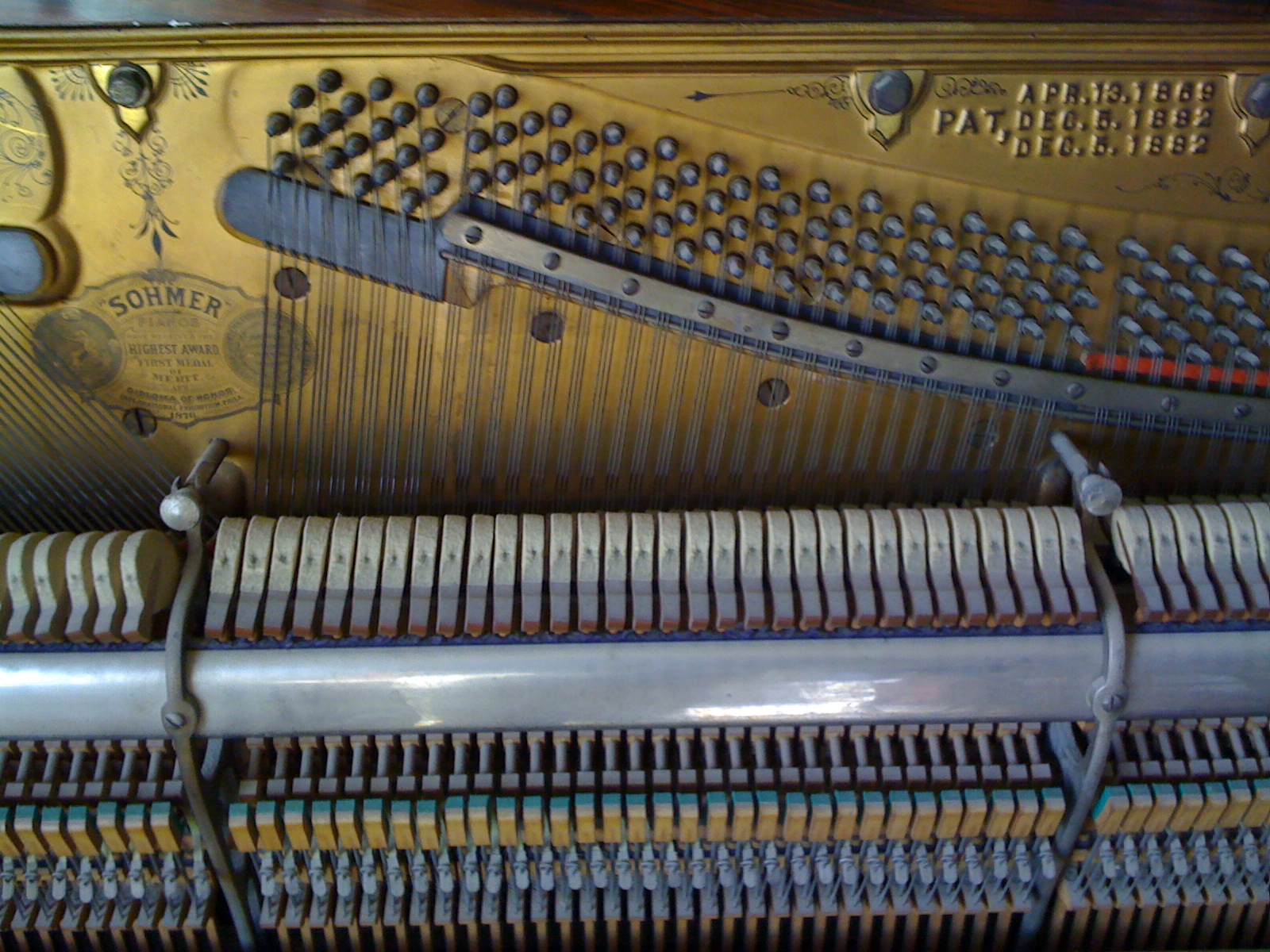
1. Do your homework. Get a copy of Larry Fine's The Piano Book and the most recent supplement. The advice in this book can assist you in becoming a savvy shopper and it will increase your confidence in and enjoyment of buying a piano.
2. Reconsider and buy a new piano. You may be surprised how painless it is to either purchase or finance a new piano. Like everything else, most of the pianos you will find on the showroom floor are made in China. (Don't be fooled into thinking you are buying American. Unless you are buying a new Steinway or Mason Hamlin piano, you are buying a piano that was built overseas.) As a result, there are tons of entry level pianos, both grand and upright, for less money than you might think. The advantages of buying a new piano include: a manufacturers warranty, which can extend to 10 or even 15 years; free tunings over the break-in period (at least one, sometimes 2 or more tunings are given by the dealer); a blemish free instrument, inside and out. The primary disadvantages are that there is a break-in period of several months where the piano will not hold its tuning very well as the strings have not yet stabilized and are still stretching.
Whether you end up buying new or used, plan on spending at least as much as you spent on your newest set of living room furniture. Pianos are way more complicated than a coffee table, but for some reason people think they should be able to get a good piano for around $500. Before you read on, you need to add a zero.
3. If you are buying used, avoid buying a really old piano unless it has been competently rebuilt. Parts wear out, felt compresses, soundboards lose their crown and crack, and rodents and insects such as moths and termites can add to the entropy. Unless you are buying a recently rebuilt piano, you may end up spending a lot more than the purchase price just getting the piano into playable condition, or you may have to pay to have the thing hauled to the dump.
4. A piano on which all of the keys "work" may still be unplayable and untunable. Pianos like this are not "good enough for a beginner".
5. The designation "cabinet grand" generally means "really big, heavy upright that was made about 100 years ago and likely needs new action parts, a new pinblock, and a new soundboard". Don't get me wrong; some of these "cabinet grand" pianos were very well made and may even be worth rebuilding. However, a new piano would likely be cheaper in the long run. Also, while it might seem neat that the piano has real ivory keytops, this doesn't really add to the value of the piano.
(Grand pianos have three legs with strings that run parallel to the floor.)
6. If you are going to buy a used piano from a private owner or even a dealer (especially if the dealer warranty is less than a year), it is worth it to pay a reputable piano technician to inspect the piano and evaluate the instrument before handing over your money.
7. NEVER accept a free piano without having a technician look it over first. Free pianos can be quite expensive.
8. Don't buy a spinet. They are more difficult and costly to repair. They usually don't sound very good because the strings are too short, and the actions on these pianos generally don't function as well as console or upright actions.
9. "Grand" does not always equal "good", even when the piano is really a "Grand" and not a "Cabinet Grand". Like upright pianos, grands age and are built with a wide range of quality of parts and workmanship. There are some good looking but TERRIBLE grand pianos on the market.
10. Take your time and look and don't be afraid to haggle for a lower price. There are a lot of pianos out there, and the more time you allow yourself to shop around, the better informed you will be and the better deals you will find.
Monday, May 23, 2011
Five Vital Skills for Piano Students
- Time management + the ability to say NO! Everyone's time is valuable. You cannot get good at piano and everything else at the same time. We recommend that our students limit their extra-curricular activities to a total of 2 (if you have piano lessons and church youth group, you've reached your quota).
- Consistency. Practicing for 2 hours twice a week, every other week is far less effective than practicing a little each day. Also, taking the summer off is a bad idea. In two months of missed lessons, all of the skills that we work so hard on during the year atrophy. Even worse, students can develop bad habits of technique and practice that are difficult to fix when they return to lessons.
- Focus. Work on one thing at a time and be clear about what it is you are working on. Know the limits of your attention span, and shift your focus to extend your productive time at the piano. Awareness of one's mistakes arises from this kind of deliberate focus, and you can't fix your mistakes without knowing they exist.
- Critical listening (and thinking). Piano students need to learn to listen in a thoughtful way. Listening for specific elements, like dynamics or articulation, is a good way to start. Before critical listening is developed, students will play a piece, and not hear their mistakes. After a student performance riddled with wrong notes and rhythms, and stops every other measure, I'll often ask the student how they felt about it. If they say something like "I thought it went pretty well, but I think I missed a note somewhere in the middle", they weren't listening critically. The best students are sensitive to every blemish, and are often pessimistic about their performance, while the worst students are ignorant of their mistakes and frequently have inflated ideas about their musical ability.
- Delayed gratification. The understanding that practice yields results over time comes from experience, but students benefit when parents model delayed gratification through saving for things they want, planting a garden, or learning a skill. When kids are also encouraged to engage in activities like this, the idea of practice will seem natural and logical. When kids never have to wait for, or work for, anything at home, the idea of practice will be foreign. The idea of talent is best abandoned as well; nothing will undermine a teacher's efforts faster than a student who believes he is talented.
Tuesday, February 8, 2011
A month of no excuses.
I have just completed the most amazing month of my entire teaching career. In the month of January, I had exactly zero students come to their lessons unprepared. That means no one came into lessons last month with an excuse ready for why they didn't practice as much as they should have. How remarkable is this? Well, I have been teaching private students since 1993, and it has never happened before now. I have had good weeks, sure. But never an entire month.
So, it is time to reflect. How did this happen, and more importantly, can it happen again?
Hypothesis #1: My student's parents don't make excuses.
In the past, I have always had a few parents who tend to make excuses for their kids. I don't have that problem this semester. Kids who have parents that make excuses, have kids that make excuses.
Corollary to Hypothesis #1: Our studio kids have awesome parents.
Hypothesis #2: Self evaluation.
All of my students complete a quick, self-evaluation at the beginning of each lesson, and give themselves a rating based on the following criteria:

There are two lines because they get a score from me as well, which is based on my perception of whether they have made sufficient progress over the course of the week. Gaps in the chart show either vacations or missed lessons. The student above is fairly consistent about getting to the piano during the week, but has dropped the ball a couple of times. When students hold themselves accountable for their work during the week, they take more responsibility for making sure that they practice. I have noticed marked improvement in my students' performance since I implemented this chart last summer.
So, can this happen again? I'm not betting on it. But, at least now I know it is possible.
So, it is time to reflect. How did this happen, and more importantly, can it happen again?
Hypothesis #1: My student's parents don't make excuses.
In the past, I have always had a few parents who tend to make excuses for their kids. I don't have that problem this semester. Kids who have parents that make excuses, have kids that make excuses.
Corollary to Hypothesis #1: Our studio kids have awesome parents.
Hypothesis #2: Self evaluation.
All of my students complete a quick, self-evaluation at the beginning of each lesson, and give themselves a rating based on the following criteria:
10 points are possible. A score of 10 indicates perfect preparation.
Subtract 1 for every day that no practice occurred.
Subtract 2 for any item not practiced that was written in your notebook.
Subtract 3 for not doing assigned theory.
Subtract 1 for any item that you forgot to bring to your lesson.
Subtract 1 for Long Fingernails .
Subtract 1 for each excuse you make for not coming prepared.
Subtract 1 if you use our bathroom.
Subtract 1 for arriving 10 minutes late, 2 for 20 minutes and so on.
Students results are plotted on a graph, that over time, might look like this:

So, can this happen again? I'm not betting on it. But, at least now I know it is possible.
Wednesday, July 14, 2010
Positive Thinking
This video is on the mark. I wish that all of our students' parents would drop the positive thinking paradigm. (Some of them have!) Learning a skill as complex as piano is not all smiles and warm fuzzies. There are rough patches to get through and walls to climb over. Frequently a student's preparation is lacking and the teacher must be the bearer of bad news. Sometimes students get upset when this happens, but that is not the teacher's fault. Honest, constructive criticism is not abuse, even if a student cries upon hearing it. Honest, constructive criticism is, in fact, a large part of teaching in general. People seem to forget that. We're not cheerleaders, we are teachers!
Subscribe to:
Posts (Atom)